All awards & honors
Share:
RecognitionUniversity levelStartup
POSE turns kumquat peel into spoons and reaches the Business Challenge Top 12
Students at FPT University's Can Tho campus developed biodegradable spoons and coasters from kumquat peel. Their POSE project explores a green-business response to plastic waste.
- Competition
- FPT Student Startup
- Organizer
- FPT University HCM Business Relations
- Campus
- HCMC
- Date
- Sep 16, 2025
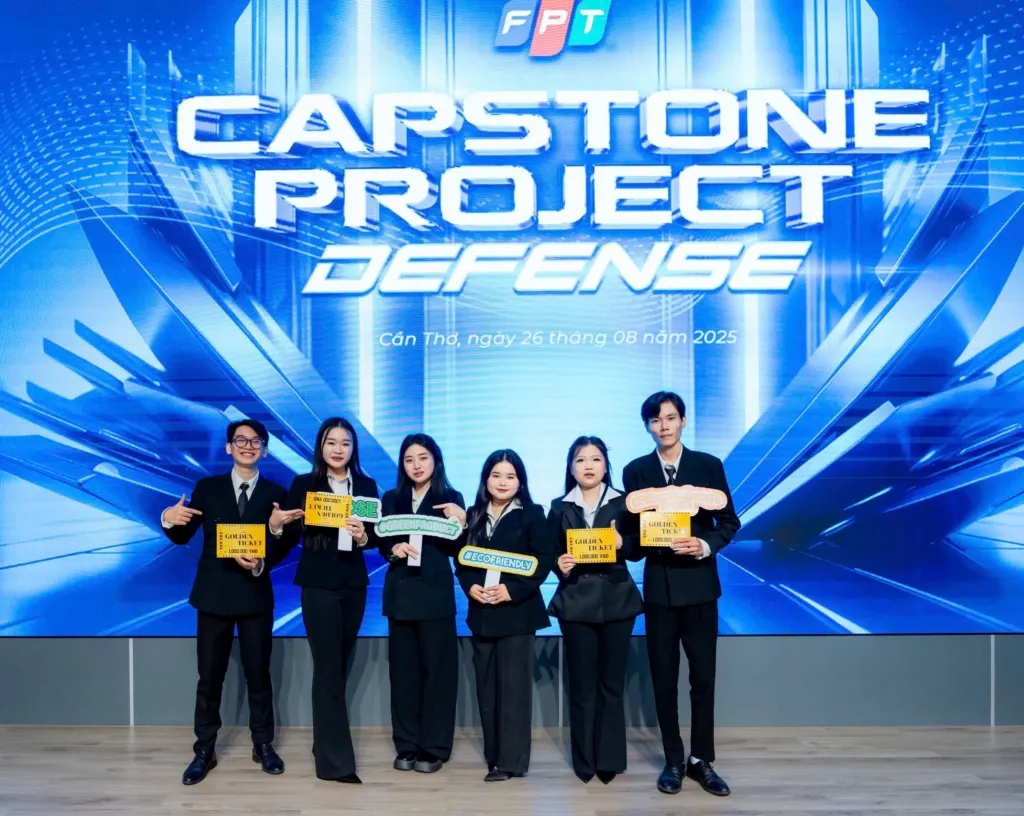
Students at FPT University's Can Tho campus developed biodegradable spoons and coasters from kumquat peel. Their POSE project explores a green-business response to plastic waste.
The idea began in Experiential Entrepreneurship 1 in September 2024. Digital Marketing and Digital Art and Design students Tran Thi Bich Tram, Duong Nguyen Tuyet Trinh, Duong Thi Thao Nhu, Nguyen Thi Hong Yen, Nguyen Mai Vinh and Vo Phuoc Huy continued developing it as their graduation project.
Concern about disposable spoons, cups and straws led the team to seek a practical alternative. They selected kumquat peel, an agricultural by-product containing cellulose and essential oils with antibacterial properties. Their ambition was to reduce plastic waste while creating community and commercial value.
Production involves collecting, cleaning and drying the peel, grinding it, mixing it with a biological binder, heat-pressing it in stainless-steel moulds and checking durability. Team representative Nguyen Mai Vinh described a lean-startup process of prototyping, testing strength, heat resistance and safety, and adjusting the formula. Heated moulds improved consistency and reduced warping during drying.
The source describes POSE spoons as naturally biodegradable and free from the microplastic residue associated with conventional plastic. It reports a cost 10–15% below alternatives made from PLA, bagasse or corn starch, attributed to inexpensive available agricultural by-products, and notes the peel's natural antibacterial properties. These are claims reported in the original article.
The article states that QUATEST 3 certified the product against MFDS 2021 Standards and Specifications for Foods Utensils, Containers and Packages. A brand-launch workshop drew nearly 20 businesses, with a cooperation proposal from Mekong Silt Resort and interest from ECOKA Joint Stock Company in Amazon distribution.
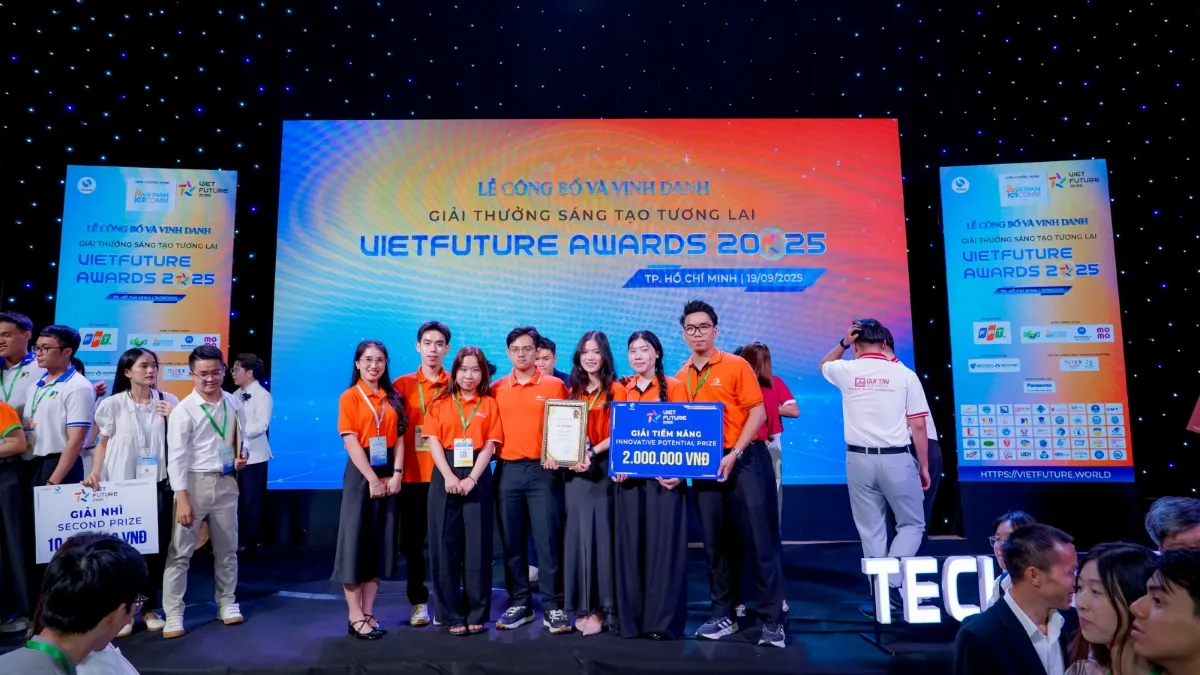
POSE reached the Top 12 of Business Challenge 2024, won a Promising Project award and VND 2 million at a Pre-Seed Funding round, received VND 50 million from the university, and established cooperation with material supplier Abavina. FPT University's Business Challenge seeks student startup and innovation projects supporting sustainable development.
The team planned to increase production, diversify products and explore exports. Reported retail prices were VND 15,000 for ten spoons and VND 45,000 for ten coasters. Research and improvements were continuing to make pricing more competitive.
FPT University Can Tho mentors supported idea development, business-model changes, feasibility testing and business connections. The team said the university's VND 50 million grant represented recognition of commercial potential as well as financial support. Practical projects gave them opportunities to pitch, raise funding and work with businesses.
The project also encountered unstable formulas, breakage and production processes that did not meet requirements. The team treated these failures as part of learning, with room to experiment and improve. In the near term, it aimed to stabilise production and expand distribution through cafes, restaurants, events, online channels and marketplaces. Longer-term plans included investment in a larger factory, better technology to reduce costs and international exports.
The original photographs show the team, its kumquat-peel spoons, certification, graduation presentation and business discussions. Article credit: FPT University.
Source: Official Proof / Certificate URL · FPT University HCM Business RelationsRead original article